Friday, 10 February 2017
STAY TUNED FOR OUR 2018 RE-FRESH

Saturday, 27 August 2016
A picture can show a story of inequality- Amy, Innovation and Infrastructure Ambassador
Earlier this year I had the privilege of spending 6 weeks travelling in Canada and the USA. One of the places my husband and I visited was Atlanta, home to Martin Luther King Jr, now home to the MLK National Historic Site and the newer National Center for Civil and Human Rights. Prior to visiting Atlanta, I had some understanding of the black rights movement based on years of watching movies and reading the New York Times over the past few years as the Black Lives Matter movement has had to become prominent due to ongoing racial injustice. However, our visits to these centres focussing on the work of the movement in the 50s, 60s and 70s to fight and end segregation in the South of the USA changed my understanding of what the people involved experienced and the level of hatred that was shown people wanting to make the world a better place.
Both places told the story of segregation in different ways. One, from the life and work of Martin Luther King; the other from the reflections and views of the movement and the people doing the work of the movement. There were pictures, there were videos, there were stories of protesters being hosed down with fire hoses, of dogs being set on people, of people being spat on and sworn at. All of this hate had continued from a time when people were stolen from Africa and forced to work in inhumane conditions for ‘owners’ who saw them as animals to make them money. Slavery was officially abolished at the end of the USA Civil War in 1865, but there were no provisions given to providing the former slaves with land and jobs so that they could feed themselves and their families. This meant that many were forced to continue in an unofficial form of slavery working for their former masters under very similar conditions. The inequality continued, and the slave owners, who lost a lot of money in the civil war, saw the former slaves as the reason for their misfortune. Over time, their hatred became law as the former slave owners were the ones with money and power in a very unbalanced society. These laws were known as segregation. Black and white people had separate bathrooms and drinking fountains, in many cases separate restaurants. They weren’t allowed to travel in the same train carriages and had separate sections on buses.
There was one photo that has particularly stuck in my mind.
It is a picture of two school housed on the same road. One is for black
children, the other is for white children. They were not allowed to go to the
same school. The school for white children is a lovely, well-kept building with
an area outside for children to play in. The school for black children is a
rundown shack which gives the impression of wind whistling through the cracks
and it being very hot in summer. Federal law in the USA at the time said that
all children had to be provided with an education. Law makers in States with
segregation in place said they met the federal laws by having separate, but
equal schools. This picture clearly demonstrated to me that this was not the
case. Black children were severely disadvantaged by their schools. While the
white children were given up to date facilities, the black children were left
with old, falling apart buildings. All were given the opportunity to go to
school, but that school experience was not equal so their ability to learn and
make something of themselves was not equal. So while it is important to
acknowledge that great things can be done with limited resources, it is also
important to acknowledge how much harder it is to do great things with limited
resources. Inequalities, such as different standards of buildings, can continue
to deepen inequalities in society and make it much harder for the people with
less to fight for equality.

Tuesday, 9 August 2016
The impacts of climate change on the world’s indigenous people- Ashleigh
Indigenous communities are some of the first people
to be experiencing the effects of climate change. This is because
many indigenous groups depend on the natural environment for their way of life,
and have a close relationship with their environment. As such, these
communities are often the first impacted by floods, droughts, and other extreme
weather events. They are also some of the lowest contributors to
greenhouse gas emissions, as many indigenous peoples live in developing
countries. However, indigenous peoples also have very limited
access to the kinds of resources that would help them cope with a
changing climate.
Despite being amongst the most
severely impacted, indigenous peoples are rarely
considered in the public climate change discussion, and are
continuing to push for the right to participate in international
decision-making. Indigenous communities are feeling the impact of changing
climate world wide. Different communities experience different impacts, but
climate change is touching all.
South America: The Kamayura
of the Brazilian Amazon have already
been severely affected by climate change. Their homeland, encompassed by the
Xingu National Park, is now surrounded
by farms and ranches. The fish stocks that the Kamayura relied on have plummeted due
to higher water temperatures in jungle lakes, and rainfall has diminished
because of increasing temperatures. The tribe has no transportation out of
their homes deep within the jungle, and little money, to buy food to replace
what they used to get from the land. Farming has also been a problem -
the lack of water has killed many crops. Elders have compared the threat from
the changing climate to that of the arrival of measles in the 1950s, when the
disease wiped out 90% of their people.
Europe & the Arctic Circle: The Saami
people live in northern Sweden, Norway, Finland, and Russia and survive by
fishing, hunting and herding reindeer. Reindeer are an important part of the
culture, food supply, and economy of the Saami communities. However, harsher winters have created
hard ice crusts over the lichen that the reindeer dig through the snow to eat,
which then caused a large loss of reindeer. The changing climate is also making
frozen lakes unsafe as the ice is unreliable, which is forcing Saami herders to
change herding routes they
had used for generations. Have a look at this short video (only 1 minute and 6 seconds!)
to hear a young Saami woman explain what the changing climate means for their
way of life.
Africa:
Traditionally the Maasai people have been pastoralists and nomadic cow-herders,
both of which are at risk from the impacts
of climate change in the Serengeti. The climate is becoming drier, with short rainy
seasons, giving grass little time to grow, and the Maasai cow herds little to eat. Their
nomadic lifestyle has become very limited by property
rights, increasing populations, and national parks, which prevents the Maasai
from moving to more suitable climates as past generations would have done.
North America: The
National Chief of the Assembly of First Nations, Perry Bellegarde, has
commented that indigenous peoples not only have rights, but
responsibilities to the land and water. Eriel Deranger, a grassroots
indigenous activist of the Athabasca Chipewyan First Nation, discussed
the historical lack of consultation by government with Aboriginal peoples
regarding climate change policy at the
Indigenous Peoples Meeting on Climate Change in January 2016. However,
speaking at the UN Conference on World Climate Change in December 2015, Prime
Minister Justin Trudeau made it clear that his
government would be turning to indigenous peoples for advice on properly caring
for the environment.
Australia: There are hundreds of different nations, each with
unique cultural practices, beliefs, and languages. However, traditional Owners
are concerned that climate change will impact their totems, which are
used to recognise different groups and are an important part of cultural
identity. Totems can be represented by animals and plants, which may be
affected by climate change. The Climate and Health
Alliance has reported that
indigenous Australians have shown higher risks of respiratory illnesses and
emergency medical care from air pollution and heat waves, as well as high rates
of mental illnesses related to losing lands and culture because of climate
change. To find out more about what young indigenous people are doing to fight
climate change in Australia, check out Seed, Australia’s first indigenous youth climate justice network.
Asia: The traditions, generational
knowledge, and subsistence lifestyle of Orang Asli, the indigenous groups of
Malaysia, are
threatened by climate change. Orang Asli make up nearly 12% of
Malaysia’s population - that’s 2.1 million people whose culture and livelihoods
are at risk due to climate change. The Temiar people of eastern Malaysia are severely
impacted by deforestation, which is itself an important cause of climate
change, as well as by its immediate impacts. The Temiar have a deep respect for
the natural environment, but their land rights are not usually acknowledged.
Logging has reduced local water supplies, prevented hunting and gathering
traditional medicines, and seen burial lands disturbed.
Across the globe, indigenous peoples
are under threat from climate change. Food sources, health, and traditions are
all at risk for cultures that have lasted longer than most of our countries.
Share with us what you would like to see your government do to support
indigenous communities in your country with the impacts of climate change. What
would you like to see the world do to support all indigenous communities under
threat from a changing climate?
Wednesday, 20 July 2016
So what are goals 11 and 12?


Thursday, 14 July 2016
How can sustainable cities help us all? Ashleigh.
Monday, 11 July 2016
World Population Day


Saturday, 11 June 2016
Climate Change is limiting our chances of a Peaceful World - Jasmine, Peace and Justice Ambassador
Friday, 20 May 2016
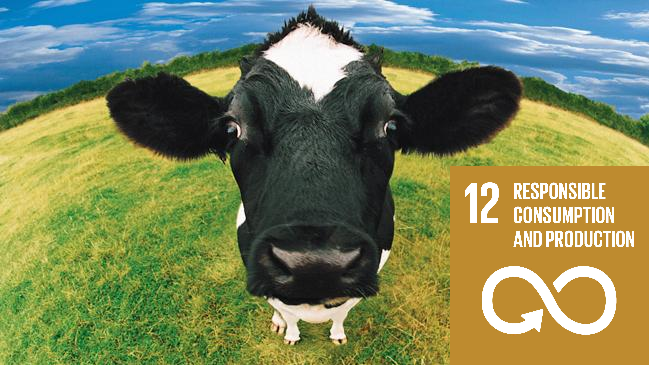
Dead Cows, Asia and the Global Economy- Laura, Sustainable Cities Ambassador
In rural Victoria and Southern NSW there is the beginnings of a cry to arms. But without understanding the issue Australia is on the cusp of accelerating the poor vs rich divide and sliding into a corporate wealth and citizen slave economy. Through the media over the last few weeks we have all heard about the Farm milk crisis, but do we understand how it came about that Fonterra dropped their Farm Gate milk price?
Farms within southern Australia have traditionally been small family operations with a couple of thousand acres, Dairy farms as a subset of this have been and still are small herds with farms employing between 2 and 4 people. With this size operation processing milk has changed enormously since the days of fetching a pail from the neighbour. No one farm can afford to purchase and run a milk processing plant, however a geographically linked group of like-minded farmers can band together and build a co-op. Then the Co-op might grow and merge with other Co-ops this is how Australia’s Largest milk processor Murray-Goulbourn came about.
Murray-Goulbourn then decided on a strategic path of growth into the Asian markets, to do this they needed more processing facilities and all the co-opted farmers couldn’t stump up the cash, so it was decided that they would ask investors, to help out. They tried to protect the farmers with conditions regarding the profit margins eating into the price paid for the raw product (Farm Gate Milk Price). This was all very ambitious and some of the strategy and goals sold to the investors didn’t take into account Asian and global market risks. Basically the price of a product on a global market is different to the price within local markets. The calculation kinda goes like this Cost to produce the product + profit margin = Price to consumer however when the consumer can’t afford to pay the end price, the profit margin drops but what happens when the profit margin can’t drop any further and the product is already being produced. The payment back to the producer becomes less than the cost to produce the product, Farm Gate Milk price dropped.
When the global financial crisis happened Australia came out on top, this meant our money and products cost more in other economies, Asia’s economy hasn’t bounced back in a timely manner. This means Murray-Goulbourn had two choices; turn the lights out and default on investors and farmers or drop the Farm Gate Milk price. When the largest milk processor drops the FGM price there is a knock on effect to the other processors, they look to the largest operator to help understand the market value. Fonterra panicked, and retrospectively dropped the milk price. This meant farmers for a couple of months payments prior to May had to return money and would be paid less going forwards. Farming isn’t a cash business where you are able to quickly access cash. Farmers can’t drop down to cash-converters and sell a tractor. Therefore they need to look at what is costing them more to keep than to sell, the farmer starts searching the farm and sees his cows. Calls the local abattoir operator and books a truck for that afternoon.
This is how we ended up in this mess but how do we help the farmers out, how do we build in a safe guard? I don't have any answers but here are some options to think about:
- In good years build a levy and invest the funds into other markets.
- Encourage primary production diversification to soften the fall for farmers for example grow crops or breed other animals. - Support other industries in rural areas such as manufacturing to stimulate the rural economy, by building manufacturing plants in small towns it allows farmers to have off farm incomes.
These are long term Government changes that need to be put into place how can we the city folk help?
- Pay extra for our local milk.
- Donate to a kick starter.
- Push our big supermarket chains to pay a higher price at the Farm Gate.
Thursday, 14 April 2016
Why women's health is fundamental for equality
overcoming further hurdles to the path of reaching gender equity. Education is an essential tool in bringing about this valuable change and improvement to women’s health globally.
For developing nations, in many countries, due to lower levels of access to health care services, maternal health, and disease can be large problems that pose an ongoing threat to women. However, these nations can benefit greatly from investing in education.
In reducing fertility rates, education for girls has been an important part in increasing female participation in school and thus decreasing birth rates. In particular, engagement in secondary and further study for women in Mali leads to an average fertility rate of 3 as compared to those without
access to education, with an average fertility rate of 7. This discrepancy highlights the great potential for education to be used as a manner in which we can aim to reduce fertility rates. This reduction is important as young women of high school or middle school age account for 1 in 7 deaths due to childbirth. Also, adolescents who give birth are up to 5 times more likely to suffer complications as a result. Thus, limiting the amount of potential births and delaying them is key in improving women’s health.
Additionally, higher levels of education for women directly correlate to a delay and spacing out of pregnancies as well as a seeking out of health care and support. This means that increasing access to education directly improves maternal health. In Burkina Faso, compared to those who have not had an education, mothers who have completed secondary school are two times as likely to give birth in health facilities, and so give birth in a safer environment. In all, around 2 maternal deaths are avoided in every 1000 women with one additional year of education.
In terms of the prevalence of HIV/aids in women, education can assist in increasing access to treatment, combating stigma and limiting discrimination. Women with post-primary education are 5 times as likely to be educated on the topic of HIV/aids, with HIV having the capability to spread twice as fast amongst girls without an education in Zambia, showing that education is the best way we can reduce the impact of health problems for women.
With generally greater access to health facilities and contraception, and more widespread knowledge about family planning and pharmaceutical services, in developed nations, the most pressing matters for women’s health can be quite different. Mental health issues, such as eating disorders, and depression have been increasing in prevalence over the years, especially amongst girls of primary and secondary schooling age. This provides a massive obstacle for change, as without an empowered, engaged and able collective of young women pioneers for gender equality, a truly just society will be difficult to attain. However, within the context of developed nations as well, education focused around women’s health can provide an important platform to facilitate assistance, raise awareness and transfer information. Undeniably, knowledge of these health problems and de-stigmatisation of such mental illnesses can have a tangible impact, allowing those who suffer from them to identify more easily if they should seek help.
Education, ultimately increases opportunities for women to access pathways to attain health care. It is a key component of working towards gender equality, that assists in reducing the barriers that limit female participation within society.
** Much of the information regarding the impact education can have in developing nations for women can be found in more detail at this link: http://unesdoc.unesco.org/images/0019/001902/190214e.pdf
I’m not making this up! A look at the treatment of women’s health
Thursday, 31 March 2016
Equality - Difference - Unity
Sunday, 20 March 2016
Never underestimate the importance of a woman. She can change the world!
The truth is that gender inequality is still a monumental, contemporary issue in all global communities. Even in Australia, gender inequality prevents equal participation in social and employment environments, and sees a gender pay gap of 17.9%. That’s right. In 2016, women are still earning less than men for doing the same work, right in our own backyard.
However, internationally, the constraints placed on women due to their gender are concerning, appalling, and in some cases, deadly. For example, arranged marriages in Pakistan can lead to ‘honor killings’ in the case of refusal or marrying below their caste. Girls in Afghanistan aren’t generally permitted to go to school under Taliban rule, and even where they can (generally families will prefer to invest in a male’s education over their female relatives), they are subjected to acid attacks, segregated education or poisoned water. In Niger, women are designated domestic duties that tend to transcend any chance at education. This education doesn’t necessarily need to be in the form of books and literature, statutes and mathematics, but personal development and interpersonal skills, market skills, financial literacy. But no. What is failed to be realised though, is refusing to invest in the education of women is refusing to facilitate a solution to the global problems of poverty and hunger.
Sustainable Development Goals 1 and 2 concern ‘End[ing] poverty in all its forms everywhere’ and to ‘end hunger, achieve food security and improved nutrition and sustainable agriculture’. Time and time again, it has been discussed and proven that women are key to reducing poverty and ending hunger by increasing education and facilitating their skill development in a similar vein to what men are entitled to. For example, women are expected to tend the farm as well as look after children, to prepare meals and keep the residence clean, while men hold land titles and make financial and commercial decisions. Some women have small artisanal businesses that stagnate due to lack of business acumen and access to finance. Teaching women time management and productivity skills lead to efficiency and better time to invest in diverse pursuits. Allowing women greater access to resources can all but eliminate hunger for up to 150 million people, according to The Food and Agriculture Organisation of the United Nations. Ensuring women are aware of investment funds and micro finance loans that could invariably increase the scope of a business is key to improving female self-sufficiency.
The point is that gender inequality doesn’t just inhibit women; it inhibits the global community. Educating and increasing access for women to productivity resources, to agricultural education, to personal development and efficiency, to basic education, can almost orchestrate a substantial decrease in global poverty and hunger. Mobilising women just a little bit - whether it be how to deal in increasingly volatile situations or how to manage their fruit-selling business efficiently and accurately - can create a whole new world, not just for the individuals, but for their children, families and community.
Never underestimate the importance of a woman. She can change the world. All that we need to do is to facilitate this change by campaigning against archaic discrimination and empowering women. This is key to working towards the elimination of poverty and hunger on a global scale.
Thursday, 10 March 2016
How can "Scrubs" teach us about gender equality?
Saturday, 5 March 2016
New school of thought- when it comes to education, girls deserve better!
Friday, 4 March 2016
Women on the frontlines of climate change
- Gender sensitive strategies to mitigate climate change, where strategies to limit the negative effects of climate change consider gender issues
- Addressing gender inequality, as without dealing with this, women will continue to suffer more from climate injustice
- Gender-sensitive strategies for adaptation, where strategies to to get used to living with the impacts of climate change consider the specific impacts climate change has on women