Showing posts with label Sustainability. Show all posts

Thursday, 14 July 2016

How can sustainable cities help us all? Ashleigh.

Sustainable cities and communities is goal 11 of the UN Sustainable Development Goals. Let’s have a brief look at what it’s all about…

Making our cities more sustainable is incredibly important with so many people living in cities – as of 2008, more people live in urban areas than rural areas, a first for human history. It is estimated that two thirds of all people will be living in urban areas by 2050. That’s a lot of people! With so many people living in cities, it makes sense for them to be a focus for addressing climate change.

Reducing a city’s greenhouse gas emissions, thereby reducing the city’s contribution to climate change, should be a key part of any strategy to make a city more sustainable. Cities are a huge area to tackle for emissions reductions, as they are responsible for more than 70% of global greenhouse gas emissions. One crucial way to do this is to reduce energy consumption, and increase the amount of renewable energy being used to power a city.

There is exciting work happening across the world to make cities of all shapes and sizes more sustainable. The Global Covenant of Mayors for Climate and Energy is a global initiative of cities and local governments to address climate change. More than 7,000 cities from 119 countries are part of the initiative. The Covenant notes that cities can innovate faster than countries, and are less tied down by national and global politics. The Covenant allows cities to share and compare data on climate and energy, and allows for increased collaboration.

The UN targets for making a city sustainable include sustainable transport systems, improved air quality and waste management, and access to green spaces. The UN Guiding Principles for City Climate Action Planning states that city climate action planning should be ambitious, inclusive, fair, comprehensive & integrated, relevant, actionable, evidence-based, and transparent and verifiable. The Guiding Principles are flexible, and intended to help cities on their sustainability journey. They do not set out strict actions local governments must undertake.

There is no one right way to make a city more sustainable. Some cities chose to work with nature, such as protecting coastal ecosystems, while others look to ‘climate-proof’ by building water treatment plants and moving energy production facilities away from areas that could be impacted by climate change. In developing cities, strategies might include early warning systems, upgrading slums, relocating people away from areas vulnerable to climate-induced impacts.

Taking action against climate change also has other benefits for the population of a city – like designing transport for people instead of cars, which improves public health. Sustainable cities are also about creating cities that are prepared for the changes climate change will bring. City planners for Copenhagen, Denmark, have made sure that their city is prepared for the projected increased rainfall and rising sea levels by designing convex streets to channel water and water storage areas.

That gives you a good start to find out more about sustainable cities! Is your city working to be sustainable? What ideas do you have to make you city more sustainable? Share your thoughts and more interesting information with us in the comments.  

Friday, 20 May 2016

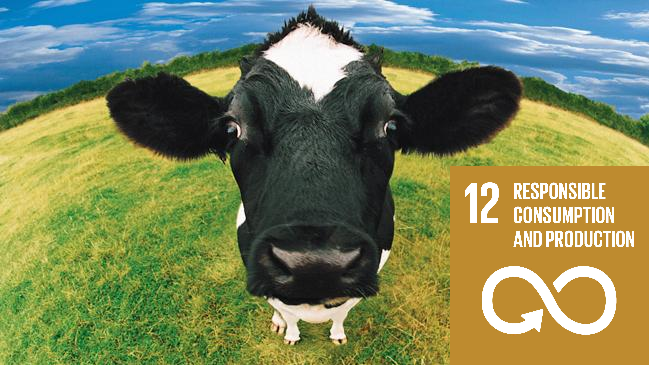
Dead Cows, Asia and the Global Economy- Laura, Sustainable Cities Ambassador


In rural Victoria and Southern NSW there is the beginnings of a cry to arms. But without understanding the issue Australia is on the cusp of accelerating the poor vs rich divide and sliding into a corporate wealth and citizen slave economy. Through the media over the last few weeks we have all heard about the Farm milk crisis, but do we understand how it came about that Fonterra dropped their Farm Gate milk price?

Farms within southern Australia have traditionally been small family operations with a couple of thousand acres, Dairy farms as a subset of this have been and still are small herds with farms employing between 2 and 4 people. With this size operation processing milk has changed enormously since the days of fetching a pail from the neighbour. No one farm can afford to purchase and run a milk processing plant, however a geographically linked group of like-minded farmers can band together and build a co-op. Then the Co-op might grow and merge with other Co-ops this is how Australia’s Largest milk processor Murray-Goulbourn came about.
Murray-Goulbourn then decided on a strategic path of growth into the Asian markets, to do this they needed more processing facilities and all the co-opted farmers couldn’t stump up the cash, so it was decided that they would ask investors, to help out. They tried to protect the farmers with conditions regarding the profit margins eating into the price paid for the raw product (Farm Gate Milk Price). This was all very ambitious and some of the strategy and goals sold to the investors didn’t take into account Asian and global market risks. Basically the price of a product on a global market is different to the price within local markets. The calculation kinda goes like this Cost to produce the product + profit margin = Price to consumer however when the consumer can’t afford to pay the end price, the profit margin drops but what happens when the profit margin can’t drop any further and the product is already being produced. The payment back to the producer becomes less than the cost to produce the product, Farm Gate Milk price dropped.

When the global financial crisis happened Australia came out on top, this meant our money and products cost more in other economies, Asia’s economy hasn’t bounced back in a timely manner. This means Murray-Goulbourn had two choices; turn the lights out and default on investors and farmers or drop the Farm Gate Milk price. When the largest milk processor drops the FGM price there is a knock on effect to the other processors, they look to the largest operator to help understand the market value. Fonterra panicked, and retrospectively dropped the milk price. This meant farmers for a couple of months payments prior to May had to return money and would be paid less going forwards. Farming isn’t a cash business where you are able to quickly access cash. Farmers can’t drop down to cash-converters and sell a tractor. Therefore they need to look at what is costing them more to keep than to sell, the farmer starts searching the farm and sees his cows. Calls the local abattoir operator and books a truck for that afternoon.

This is how we ended up in this mess but how do we help the farmers out, how do we build in a safe guard? I don't have any answers but here are some options to think about:
- In good years build a levy and invest the funds into other markets.
- Encourage primary production diversification to soften the fall for farmers for example grow crops or breed other animals. 
- Support other industries in rural areas such as manufacturing to stimulate the rural economy, by building manufacturing plants in small towns it allows farmers to have off farm incomes. 


These are long term Government changes that need to be put into place how can we the city folk help?
- Pay extra for our local milk.
- Donate to a kick starter.
- Push our big supermarket chains to pay a higher price at the Farm Gate.